

Straightening your teeth doesn’t have to mean a mouth full of metal. Clear aligners have transformed orthodontics, giving kids, teens, and adults a discreet way to get the smile they’ve always wanted. But how exactly do these transparent trays shift teeth into place?
Let’s break down the science, benefits, costs, and candidacy so you can decide if clear aligners are right for you.
What Are Clear Aligners?
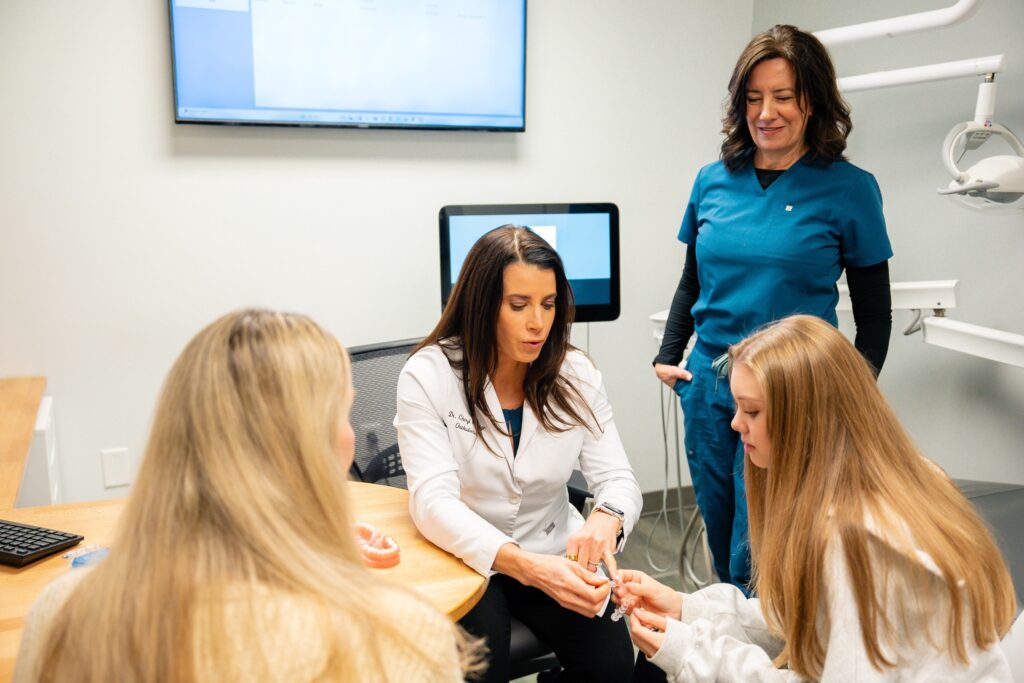
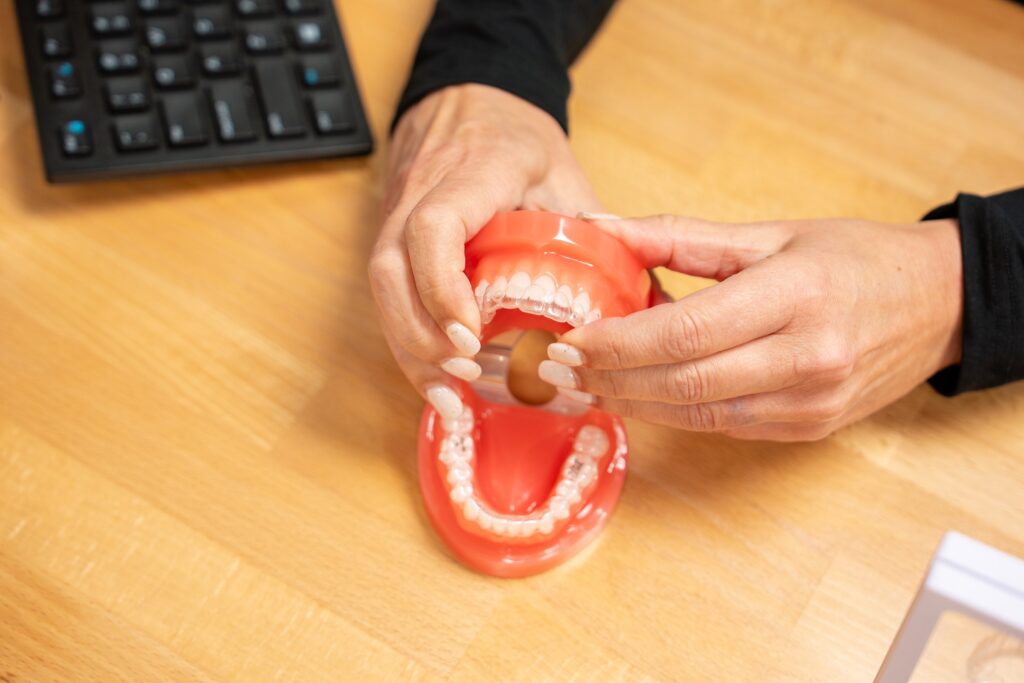
Clear aligners are custom-made, transparent thermoplastic trays that fit snugly over your teeth to gradually shift them into a straighter position. They’re a nearly invisible alternative to metal braces and one of the most popular orthodontic options today.
Here’s what makes them unique:
- Custom-fit design. Each tray is made from digital scans of your teeth, so it fits precisely.
- Nearly invisible. The thin, transparent plastic is hard to notice from a conversational distance.
- Removable. Take them out to eat, brush, and floss. No food restrictions or special cleaning tools required.
- Sequential system. You wear a series of trays, each slightly different from the last, to move teeth step by step.
- Versatile treatment. Aligners can correct crowding, gaps, and mild-to-moderate bite issues.
At Greater Chattanooga Orthodontics, Dr. Cheryl Aldridge offers clear aligners as one of several options in her lineup of tailored treatments. Whether you’re an adult who never got braces as a kid or a teen looking for something more subtle, clear aligners may be a great fit.
How Clear Aligners Move Teeth: The Science Explained
Clear aligners work by applying gentle, controlled pressure to specific teeth, which triggers your body’s natural bone remodeling process. Over time, this pressure guides teeth into their new, planned positions.
Here’s the biology behind it:
- Pressure meets bone. Each aligner puts targeted force on certain teeth. That pressure passes through the tooth root into the surrounding bone.
- Bone remodeling begins. On the side receiving pressure, bone breaks down (a process called resorption). On the opposite side, new bone forms to fill the space. This lets the tooth shift.
- The periodontal ligament cushions the movement. This soft tissue between your tooth and bone stretches and compresses, allowing safe, gradual movement.
- Small shifts add up. Each tray moves teeth roughly 0.2 to 0.33 mm before you switch to the next one. Trays are typically worn 1 to 2 weeks each.
- Attachments help with tricky moves. Small tooth-colored bumps bonded to certain teeth give the aligners extra grip for rotations, tipping, and other complex movements.
- Consistency matters. To keep progress on track, aligners need to be worn 20 to 22 hours per day. That means only removing them for meals, drinks (other than water), and brushing.
Under Dr. Aldridge’s care, every step of the process is mapped out digitally before you ever put on your first tray. As a member of the American Association of Orthodontists, Dr. Aldridge combines proven biological principles with cutting-edge tech to design treatments that move teeth safely and efficiently.
Benefits of Clear Aligners
Clear aligners offer real advantages that go beyond looks. From lifestyle flexibility to easier oral hygiene, here’s what patients love about them.
Why Are Clear Aligners So Popular for Discreet Treatment?
The biggest draw for many patients is appearance. The thin, clear plastic makes aligners hard to spot, which is a big win for adults in professional settings and teens who feel self-conscious about metal. You can smile, present, and pose for photos without visible hardware getting in the way. Because the trays are smooth plastic, there are also no brackets or wires to rub against your cheeks and lips, which many people find more comfortable throughout the day.
How Do Clear Aligners Improve Daily Life During Treatment?
Aligners fit easily into busy schedules. Here are some of the day-to-day perks:
- Removable for meals and cleaning. Pop them out to eat whatever you want. No cutting up apples or skipping popcorn on movie night. Brushing and flossing stay simple too, because there’s no hardware to work around.
- Fewer emergency visits. With no brackets to break or wires to poke, unexpected trips to the office are rare.
- Predictable results you can preview. Digital treatment planning shows you an animated preview of how your teeth will move before you even start.
- Easier oral hygiene access. Since trays come out for brushing and flossing, it’s simpler to keep teeth and gums clean during treatment compared to working around fixed brackets and wires.
- Compatible with active lifestyles. Whether you play sports, an instrument, or perform on stage, aligners rarely get in the way.
- Fewer food worries. Because the trays come out at mealtime, you don’t have to rethink your favorite foods for the length of treatment.
For many patients at Greater Chattanooga Orthodontics, these benefits make clear aligners the perfect fit. The convenience adds up over months of treatment, and most people find that the trays quickly become a natural part of their routine.
Clear Aligners vs. Traditional Braces: How They Compare
Both clear aligners and custom braces can produce beautiful smiles, but they work differently. Here’s a side-by-side look at how they stack up:
| Feature | Clear Aligners | Traditional Braces |
|---|---|---|
| Appearance | Nearly invisible | Visible brackets and wires |
| Removability | Removable for meals and cleaning | Fixed in place 24/7 |
| Comfort | Smooth plastic, minimal irritation | Brackets and wires may irritate cheeks |
| Treatment scope | Best for mild to moderate cases | Handles severe and complex cases better |
| Compliance required | Must wear 20–22 hours daily | Works passively, no removal needed |
| Oral hygiene | Easy brushing and flossing | Requires special tools and extra time |
| Food restrictions | None (trays come out) | Avoid sticky, hard, and crunchy foods |
| Office visits | Typically fewer, shorter visits | Regular adjustments needed |
The best option depends on your specific case, lifestyle, and goals. Custom braces (including the KLOwen custom bracket system Dr. Aldridge offers) may be the better choice for more complex bite corrections. For lots of patients, though, aligners deliver excellent results with more flexibility.
Not sure which option is right for you? A free smile exam with Dr. Aldridge is the fastest way to find out.
Who Is a Good Candidate for Clear Aligners?
Clear aligners work well for a wide range of patients, but they aren’t the perfect fit for every case. Here’s who tends to benefit most:
- Patients with mild to moderate concerns. Crowding, spacing, and common bite issues respond well to aligner treatment.
- Teens and adults committed to wearing them. Success depends on wearing the trays 20 to 22 hours a day, every day.
- People with good oral health. Cavities or gum issues should be treated before starting aligner therapy.
- Those looking for a discreet option. If you don’t want visible hardware, aligners are a strong choice.
Aligners may not be the right fit if you have severe malocclusion, complex tooth rotations, or significant jaw alignment issues. In those cases, custom braces often deliver better results.
The only way to know for sure is a professional evaluation. Dr. Aldridge will review your bite, take digital scans and digital X-rays, and recommend the treatment that fits your smile goals. Book a free smile exam at Greater Chattanooga Orthodontics to find out what’s possible for you. Your smile has endless possibilities, and this simple visit is the best way to start exploring them.

Frequently Asked Questions About Clear Aligners
What are the downsides of clear aligners?
The main downsides are compliance and case limitations. Aligners only work when worn 20 to 22 hours a day, so you have to be disciplined. They also may not correct severe orthodontic cases as effectively as braces. Some patients also need refinement trays at the end of treatment to perfect their results.
How quickly do aligners move teeth?
Each aligner moves teeth roughly 0.2 to 0.33 mm before you switch to the next tray. Most people wear each aligner for 1 to 2 weeks. That means small, steady progress adds up week by week, with most cases completing in under 18 months.
Why don’t some dentists recommend aligners?
Some cases are simply too complex for aligners to handle well. Severe crowding, significant bite issues, or major rotations often need the precision of custom braces. Compliance can also be a concern, since aligners only work when worn consistently. An orthodontist can tell you which option gives you the best outcome.
Do aligners fix teeth permanently?
Aligners move teeth into their new positions, but keeping them there requires wearing retainers long-term. Without retainers, teeth can gradually shift back. At Greater Chattanooga Orthodontics, we provide in-house 3D-printed clear retainers to help protect your new smile for life.
Can I eat with clear aligners in?
No, you should always remove your aligners before eating or drinking anything other than water. Food can get trapped, damage the trays, and lead to stains or decay. Colored drinks like coffee, tea, and soda can also stain the plastic, so remove your aligners for those too.
How long is typical treatment?
Most clear aligner cases take between 6 and 18 months, with an average around 13.5 months. Simple cosmetic corrections may finish in as little as 6 months, while more involved cases can take longer. Dr. Aldridge will give you a personalized timeline based on your specific goals during your free smile exam. Ready to see if clear aligners are right for you? Book your free smile exam today and take the first step toward the confident smile you’ve been dreaming of with Dr. Cheryl Aldridge and our friendly team at Greater Chattanooga Orthodontics.